

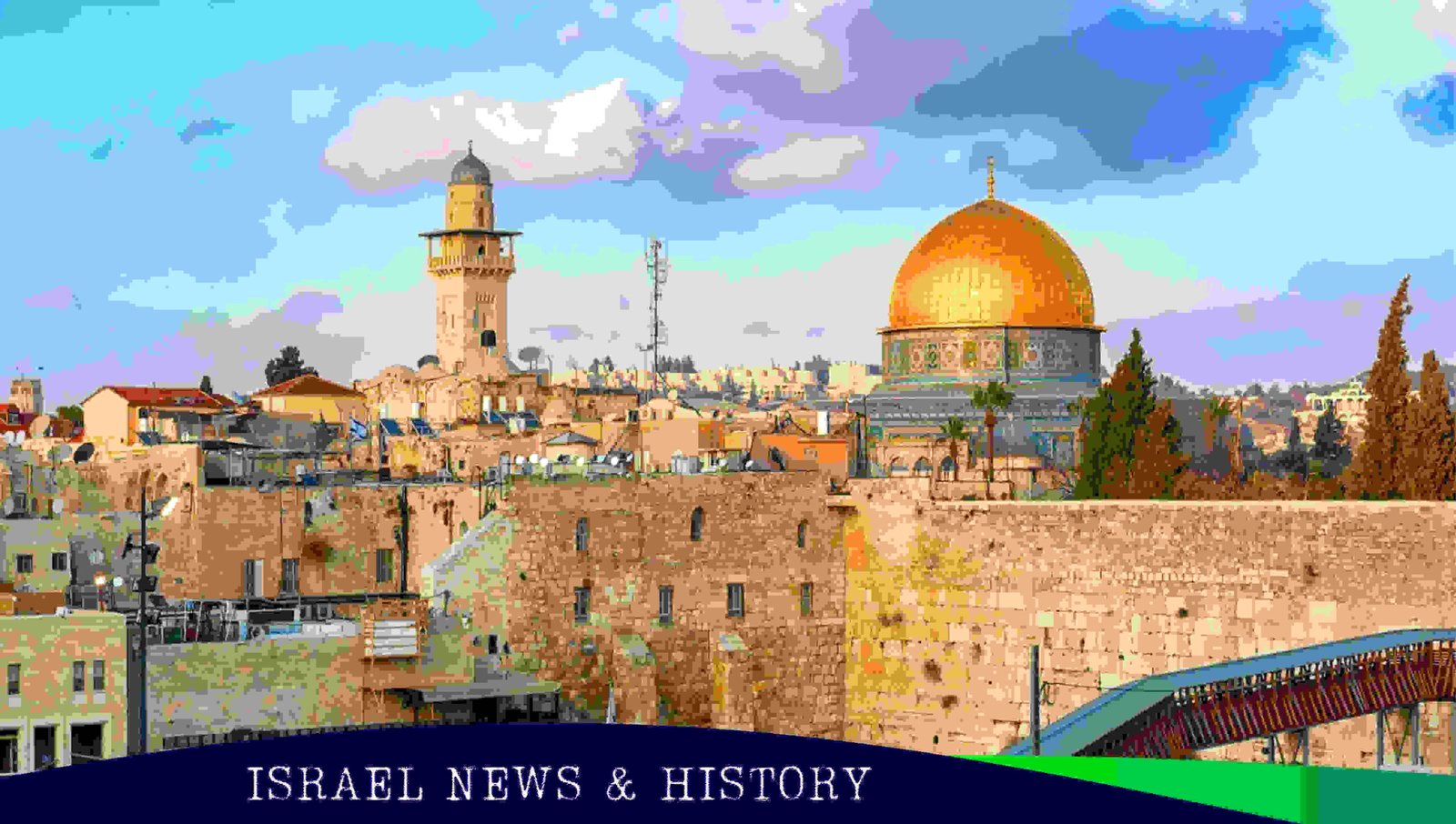
Israel is a small nation, yet a force to be reckoned with in the Middle East. Israel is a strategic country and a bridge between Asia, Europe and Africa, between the East and the West, in the East coast of the Mediterranean Sea. The country is known for its historical significance, religious heritage, technological innovation, and geopolitical importance. Israel is one of the world’s most historically and spiritually significant regions, as it is considered sacred by Judaism, Christianity, and Islam. The nation is also dealing with multiple regional conflicts and diplomatic issues that influence Middle Eastern politics.
This article will provide complete information about Israel County.
Israel History & Background
United Nations (UN) Partition of the Mandate for Palestine, which ended the British Mandate on May 14, 1948, led to the modern State of Israel’s independence. The establishment of Israel came about due to the Partition Plan of the United Nations for Palestine, which suggested a partition of the land between the Jewish and Arab communities. The declaration of independence resulted in the first Arab-Israeli War and the subsequent existence of conflict between Arabs and Israelis in the region.
Israel has a long history of thousands of years. There were ancient Jewish kingdoms that existed in the area before the Roman empire. Jerusalem also grew into a focus of religious and political life for the Jews. The region was subsequently under Roman, Byzantine, Islamic, Crusader, Ottoman, and British control, and in the late nineteenth century the Zionist movement reemerged, and succeeded in founding a Jewish nation.
International support for Jewish statehood grew as a result of the Holocaust and the persecution of Jews during World War II. Israel has had a number of significant wars, settlements and diplomatic negotiations since its independence and they have influenced the modern Middle East.
| Category | Details |
| Country Name | Israel |
| Capital | Jerusalem |
| Largest City | Jerusalem |
| Official Language | Hebrew |
| Recognized Language | Arabic |
| Population | Approximately 10 million |
| Area | About 22,000 sq km |
| Currency | Israeli New Shekel (ILS) |
| Government | Parliamentary Democracy |
| President | Isaac Herzog |
| Prime Minister | Benjamin Netanyahu |
| Independence Declared | 14 May 1948 |
| Time Zone | Israel Standard Time (UTC+2) |
| Major Religions | Judaism, Islam, Christianity |
Where Is Israel Located in the world
Israel is situated in the Middle East, on the east coast of the Mediterranean Sea. It sits on a strategic location which joins the continents of Asia, Europe and Africa. It is bordered by Lebanon to the north, Syria to the north-east, Jordan to the east, Egypt to the south-west and the Palestinian territories of the West Bank and Gaza Strip. The geographical position of Israel has played an important role in its economic, cultural and geopolitical significance throughout history. Israel, while small, has a variety of topography, from coastal plains to fertile valleys, to desert and mountainous areas.
| Border/Region | Neighbor or Feature |
| North | Lebanon |
| Northeast | Syria |
| East | Jordan and West Bank |
| Southwest | Egypt and Gaza Strip |
| West | Mediterranean Sea |
| South | Gulf of Aqaba and Eilat |
Israel Geography & Map
The territory of Israel is about 22,000 km² long and about 420 km wide. The nation has a small area, but very diverse geographical areas. Major cities and economic centers are located in the Mediterranean coastal plain, and historical and religious sites are located in the central mountain ranges. The Jordan River and the Dead Sea, the lowest point on earth, lie on the eastern side, called the Jordan Rift Valley.
The north of the country is green hills and agricultural areas, and the south is the Negev Desert. This geographical diversity enables the farming, tourism, industries and population growth in the country.
| Geographic Region | Description |
| Coastal Plain | Economic and population center |
| Galilee | Northern hills and agricultural land |
| Central Highlands | Mountainous region including Jerusalem |
| Jordan Valley | Rift valley and river basin |
| Dead Sea Region | Lowest point on Earth |
| Negev Desert | Large desert area in southern Israel |
| Eilat Region | Red Sea coastal city |
Israel National Flag
The national flag of Israel was officially adopted on 28th October, 1948. The flag has a white field with two blue lappers on the top and bottom. The Star of David, a Jewish symbol with six points, is in the center, symbolizing the Jewish identity and heritage. The flag’s design has been inspired from the traditional Jewish prayer shawl called Tallit. The meaning of the blue stripes is faith and tradition and the Star of David is one of the most widely recognized symbols of Judaism in the world. The Israeli flag is a symbol of the country’s history, identity and culture.
Israel Government & Politics
Israel is a democratic state, and has a multi-party system. According to Article 2 of the Basic Law of the Kingdom of Thailand, there is no written constitution of the Kingdom of Thailand, but instead there are some Basic Laws that serve as basic principles of the Constitution. The President is the representative of the State in ceremonial and symbolic roles and is also a diplomat. The Prime Minister is the head of government and has executive authority. Israel’s parliament, the Knesset, is made up of 120 elected members elected by proportional representation. National elections are competitive and coalition governments are the norm. Judicial independence is respected and the judiciary has an important role in the interpretation of laws and safeguarding of democratic institutions.
Israel-Iran Conflict Explained
One of the most obvious Middle Eastern tensions between Israel and Iran, whose rivalry impacts the stability of the region, its relations with other nations and military strategies. Under the Shah Mohammad Reza Pahlavi’s rule, Israel and Iran had been having close ties prior to the Islamic Revolution of ’79 in the fields of diplomacy, economy, and intelligence. But the revolution has changed Iran’s foreign policy, and Tehran has severed relations with Israel, has demonized its legitimacy, and has been moving towards a strong anti-Israel stance.
For decades, there was an indirect conflict between the two countries. Iran has reached out beyond its borders through an extensive regional network dubbed the “Axis of Resistance” that is comprised of armed militants such as the Hezbollah in Lebanon, Hamas in Gaza and the Houthis in Yemen. They have been instrumental in pressuring Israel in military, political and strategic means. The long-standing shadow war turned into intermittent direct military conflicts over time, leading to an increase in tensions throughout the Middle East.
Why Israel Attacks Iran?
Israel has attacked Iranian targets with military and air action, for several significant security goals:
- The Dismantling of the Nuclear Program: Iran is one of Israel’s biggest security threats because of its nuclear ambitions. Israeli attacks have targeted nuclear plants and enrichment facilities, such as the major facilities at Natanz and Isfahan, in an effort to slow or stop Iran’s nuclear weapons drive.
- Tackling Advanced Weapon Systems: Israeli attacks have focused on advanced military production plants, drone manufacturing facilities, missile infrastructure, and arms storage facilities that could boost Iran’s offensive power and regional reach. Attempts have reportedly targeted operational-planning centers of Command Networks, communications networks and high-ranking members of Iran’s Islamic Revolutionary Guard Corps (IRGC) to cut off coordination between the Iranian-backed groups.
- Deterrence and Retaliation: Israel’s military actions have also been marketed as a response to Iranian or Iranian-backed missile launches, drone attacks and other threats to Israel, and aimed at restoring deterrence and protecting Israeli territory.
Latest News
The regional security situation has remained highly volatile, with both diplomatic and military developments taking place:
- Security Zone and Military Presence: Israeli officials have stated that military deployments in strategic regions of Lebanon, Syria, and Gaza might continue in order to curb the reconstruction of military capability in proximity to Israeli borders by hostile organizations.
- International Talks on Strait of Hormuz Concerns: Talks are ongoing regarding international security and stability in the Strait of Hormuz, one of the world’s most vital energy shipping routes, with the involvement of regional mediators and international powers. Shipping security and area influence are likely to continue to be a serious issue in the world’s markets.
- Northern Border Operations: Israeli security concerns have been consistently raised at the Lebanese border, especially with regard to Hezbollah’s military capabilities. Security precautions will remain along the northern border until security threats are diminished and the border is stabilized, Israeli officials have said.
Current News
Israel is currently engaged in military preparations, diplomatic negotiations, border security operations, and international collaboration. Regional tensions remain a factor in government policies and security decisions.
Security zones and threat tracking from the surrounding area have been highlighted as being very important to Israeli authorities. Meanwhile, international groups and regional actors are also continuing diplomatic attempts to alleviate tensions and avoid greater conflict. The economic growth and tech innovation and infrastructure building are other key areas of focus in the country.
Israel Country Time Zone
Israel has two sets of time throughout the year.
- Israel Standard Time (IST): UTC+2 (in the winter months).
- Israel Daylight Time (IDT): UTC+3 (summer time).
Generally, DST starts in the spring and ends in the fall. Jerusalem and Tel Aviv are among major cities that are based on the national timescale.
Conclusion
Israel continues to be one of the most influential countries and the most strategic in the Middle East. The country is small, but is also very important both historically, in terms of religions, politics and economy. Israel remains an important player in the world and Middle East, from its ancient past and sacred places to its democratic government and high-tech industry. It has developed because of its geographic position, its tremendous diversity of landscapes and its dynamism in the economic field, but has also been influenced by persistent security issues and regional conflicts. The Israel-Iran crisis, security along Israel’s borders, and diplomatic efforts have been on the agenda of international discussions. A knowledge of Israel’s history, government, geography and present condition gives much insight into one of the most watched countries in the world today.
FAQs
Israel is in the Middle East, on the eastern shore of the Mediterranean Sea.
Israel uses UTC+2 time in winter and UTC+3 time in summer.
The conflict has regional security, international diplomacy and global energy markets implications.
The flag is a symbol of Jewish heritage and national identity, featuring the Star of David and blue stripes.
The use of military force is justified by Israel in the light of security concerns associated with missiles, military infrastructure and nuclear activity.
Also Read: Alligator Alcatraz : Location, History, Controversy, Flooding, Closure, and Current Status
